Prayer Music Beyond the Church: Sacred Music Kept Being Written After Its Patrons Lost Their Power
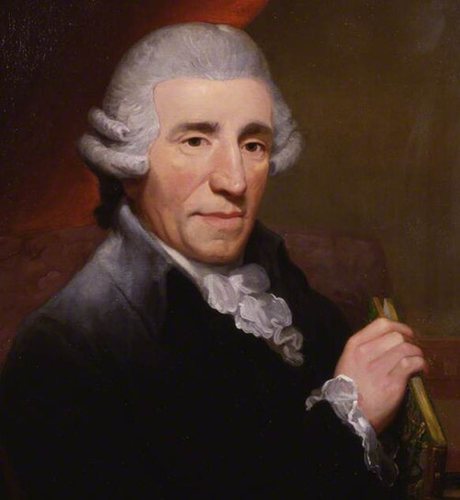
From the second half of the 18th century, the church gradually stopped being a major patron of music. In Bach's day, new pieces were written every week for Sunday worship. After that, the center of musical patronage shifted to the nobility at court, and in the 19th century, after the French Revolution, to the citizens who bought concert tickets. Only a handful of pieces were still written for the church.
Did sacred music fade away with it? No. Pieces on religious subjects kept being written in every era. What changed was who paid for them, and where they were sung.
Music Inside the Service: Bach
Until the early 18th century, most sacred music was part of a church service. Bach's St Matthew Passion was performed at a church in Leipzig during the service on Good Friday, the day Jesus was crucified. A sermon was given between Part One and Part Two. The listeners were not an audience but a congregation gathered for worship.
Around the same time in London, Handel was turning Bible stories into English oratorios and staging them in theaters. The road that would lead sacred music out of the church was already open (related article: 1685: The Year Bach and Handel Were Born).
From the Court Chapel to the Concert Hall: Mozart and Haydn
In the late 18th century, sacred music was commissioned by court chapels. Mozart wrote masses for worship as a court musician serving the Archbishop of Salzburg. In 1781, however, he clashed with the archbishop and left his post. From then on, he made his living in Vienna through concerts, published scores and opera.
Haydn served the Hungarian noble family of Esterházy for nearly 30 years. After his prince died, he was invited to London, where he is said to have been deeply moved by Handel's oratorios. The oratorio he wrote after returning home, The Creation, premiered in 1798 at a nobleman's palace, and the following year it was performed for the general public in a theater. The Bible music that Handel had begun in the theater was carried on here.
No Liturgical Words in the Theater: Beethoven
Beethoven began his Missa Solemnis for the ceremony at which his close friend Archduke Rudolf was installed as an archbishop. But the composition dragged on, and it was not finished until 1823, three years after the ceremony. The first complete performance was not at a church service but at a concert in St Petersburg, Russia, the following year.
In 1824, at the Vienna concert that premiered the Ninth Symphony, parts of this mass were also performed. The authorities did not allow the words of the Mass to be sung in a theater, however, so they are said to have been performed under the name of "hymns." The mass was leaving the place of worship and becoming music for listening.
Oratorios for Music Festivals: Mendelssohn
In 1829, Mendelssohn revived Bach's St Matthew Passion, about 100 years after it had last been heard. The venue was not a church but the concert hall of a Berlin choral society. Mendelssohn's own oratorio Elijah premiered in English in 1846 at the Birmingham Festival in England. Music festivals run by citizens had become the new patrons of sacred music.
In the late 19th century came large sacred works meant to be heard in the concert hall, such as Brahms's A German Requiem and Verdi's Requiem. Brahms did not use the fixed words of the liturgy; he chose his own texts from the Bible.
Orchestras, a Prison Camp and the Iron Curtain: The 20th Century
In 1930, Stravinsky wrote his Symphony of Psalms for the 50th anniversary of the Boston Symphony Orchestra. This time, the patron was an orchestra. The score reads: "composed to the glory of God and dedicated to the Boston Symphony Orchestra."
During the Second World War, the French composer Messiaen was taken prisoner by the German army. In the camp, he wrote the Quartet for the End of Time. The title comes from the scene in the Book of Revelation in the New Testament where an angel announces that "there should be time no longer." It premiered inside the camp in January 1941, before an audience of prisoners.
In Estonia, then part of the Soviet Union, Pärt set words of prayer to music in a country that kept religion at arm's length. His Credo of 1968 was condemned for its religious text, and Pärt entered a long period of searching. Eventually he found a spare style that sounds like the ringing of bells, and in 1980 he left the country. His Stabat Mater of 1985 sets a prayer handed down since the Middle Ages, about the Virgin Mary grieving at the foot of the cross.
Prayer at the Cinema
In the late 20th century, film also became a patron of sacred music. The Mission, a 1986 film scored by Morricone, tells the story of Jesuit missionaries and the Indigenous Guaraní people in 18th-century South America — a story set in the same era as Bach and Handel, on the other side of the world. An oboe melody is joined by Indigenous flutes and a choir.
When the Patrons of Music Change
The patrons of sacred music moved from the church to the court chapel, and then on to concert audiences, music festivals, orchestras and film. Sacred music, once a fixed duty of worship, became a subject that composers could choose for themselves. That is exactly why prayer music kept being written — even in a prison camp, even in a country that kept religion at arm's length.
The patrons of music as a whole, not just sacred music, shifted in the same way: from the age of the church and the court to the age of the citizen. A chart makes the change clear at a glance.
Share (%) of the pieces collected on this site — not only those on religious subjects — by who commissioned them. "Citizens & home" covers pieces for audiences at concerts and music festivals, and for people playing at home or in salons. "Other" includes theaters, state ceremonies, education and film.
What we have looked at here is the Christian music of Europe. In the same centuries, who supported the music of other religions?
Generative AI is used to help create the articles and data. The content may contain errors.